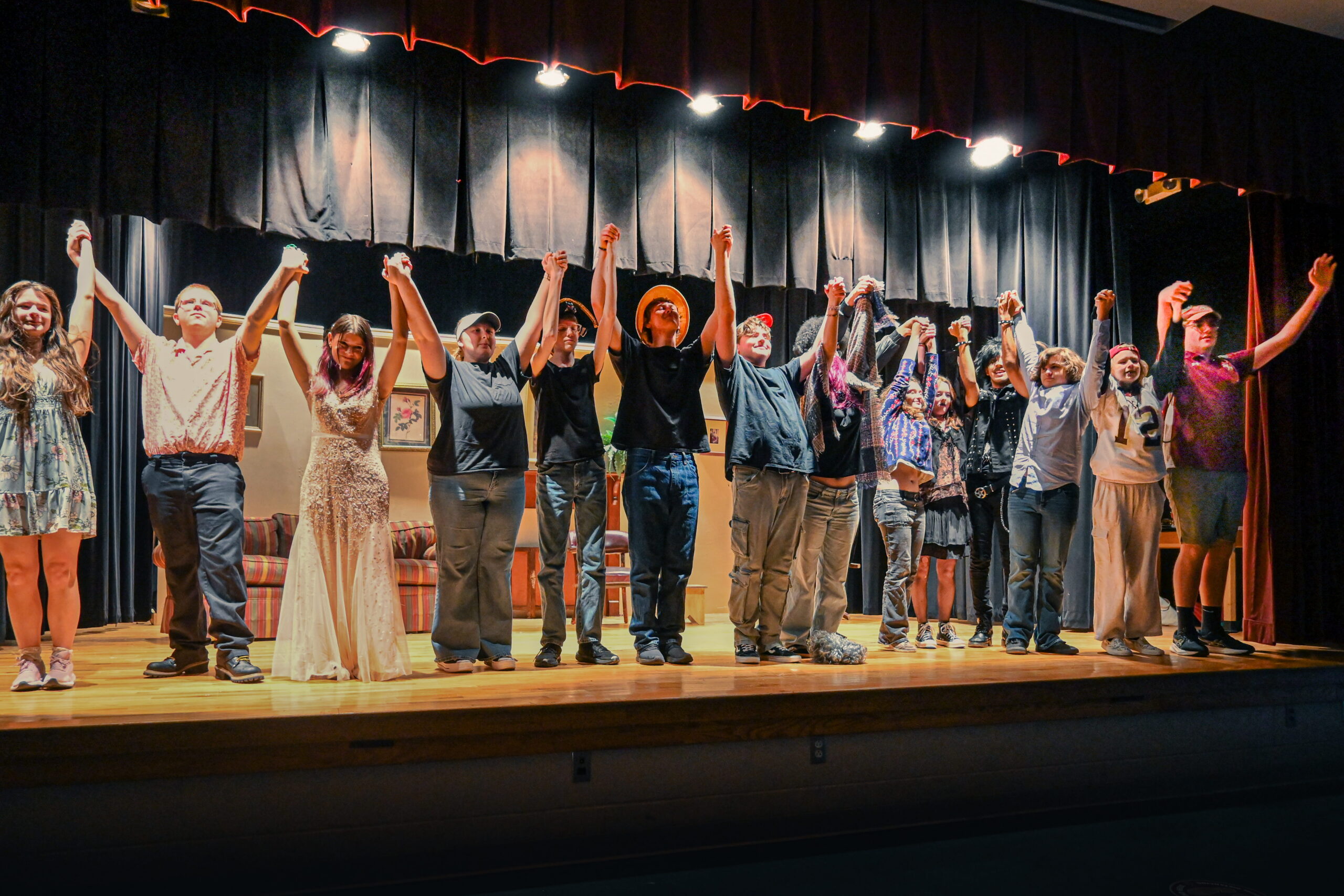
Before Alex Strum’s “Southfield Stories” began, the audience heard a message that shaped the evening’s purpose: Theatre Club director Dan Mackin explained that the stage is a place where shy students discover confidence, creativity, and connection. The stage helps students grow.
The First Curtain Call:
As anticipation built, rows of family, friends, and mentors filled the room, eager for the club’s opening performance. Excited chatter spread through the auditorium as the audience waited to see what story the play would tell. When the lights dimmed, and the play began, it became clear the performance meant more to the students than simple entertainment.
Under the stage lights, the students’ nervousness transformed into poise. Scenes flowed naturally from one moment to the next. If an actor began to show signs of apprehension, their peers responded with small comforting signs: a nod, a smile, or quiet encouragement to keep going.
Throughout rehearsals and performances, students relied on each other for motivation. Over time, that support helped students feel more assured onstage. This sense of teamwork, Mackin explained, was one of the club’s most important goals. “It’s important that students feel that they are part of a supportive community where they all work together toward a goal,” he said.

For many students, the club was a place for growth as well as performance. “When you join, there is new people and people that have already done theatre, so everyone understands what it feels like to be embarrassed,” one student said. “By the time the show comes, you are able to have fun.” The club gives students space to grow, improve, and explore future interests in performance.
What Impact Does Theatre Make in Schools?
Theatre clubs can create a more welcoming school environment. Dan Mackin said, “There’s something about the theatre that helps all people, especially teenagers, develop trust in their peers and teachers.” The Theatre Club at Ninety Six High School offers a safe place for all types of students. During after-school practices, Mackin encourages students to collaborate, be creative, and trust one another. With their peers. actors can complete trust-building exercises that help them feel comfortable expressing themselves. These exercises help students become more open to trying new things.
Beyond self-expression, the Theatre Club teaches discipline and teamwork, much like a sports team. Theatre and athletics both require practice, high-level teamwork, and the ability to perform under pressure in front of an audience. Like a 4×800 relay team, a play depends on every person doing their part successfully. Both theatre and athletics require hours of practice, discipline, and constructive feedback that gradually build improvement. In support, Mackin shared this analogy, stating, “Much like sports teams, there’s a lot of growth that happens when a kid consistently works on improving the way they perform.” Through teamwork and practice, students continue to improve their performance.
As the final applause filled the auditorium, it celebrated more than a victorious first production. For many students, it was a chance to step outside of their comfort zones, work together creatively, and discover a stronger sense of themselves both onstage and off. The showcase marked what students and directors hope will become a lasting creative community at NSHS. Through theatre, students can cultivate stage presence, creativity, and confidence while finding a place where they feel they belong. As the club continues to grow, it will remain a safe place for self-expression and collaboration.